
July 16th, 2025
What Is TMJ Disorder?
Temporomandibular joint (TMJ) disorder, or TMD, affects the joint that connects your jaw to your skull. When this joint becomes inflamed or strained, it can cause jaw pain, muscle tension, headaches, and difficulty chewing or opening the mouth.
Many people seek TMJ relief when symptoms begin disrupting daily life. In most cases, non-surgical TMJ treatment can effectively reduce pain and restore comfortable jaw function.
How to Get TMJ Relief with Non-Surgical Treatment in Western North Carolina
Most patients can achieve meaningful TMJ relief without surgery. Non-surgical TMJ treatment focuses on reducing inflammation, relaxing overactive muscles, and stabilizing the jaw joint. When symptoms are addressed early, conservative care is often highly effective.
Self-Care and Lifestyle Modifications
In many cases, simple lifestyle changes provide significant TMJ relief. Reducing strain on the jaw allows inflamed muscles and joints to recover. Recommended strategies may include:
- Eating soft foods to reduce joint pressure
- Avoiding gum chewing and nail-biting
- Practicing proper posture to decrease jaw stress
- Managing stress through relaxation techniques
These adjustments are often the first step in conservative TMJ treatment.
Medications for TMJ Pain Relief
Medications are often used to reduce inflammation and calm muscle tension while other conservative treatments take effect. Anti-inflammatory medications may help relieve joint swelling, while muscle relaxants can reduce spasms caused by clenching or grinding.
In some cases, short-term use of prescription medications may be recommended to manage severe flare-ups. When bruxism or stress-related clenching contributes to symptoms, certain medications may help reduce nighttime muscle activity.
It’s important to understand that medication alone does not correct the underlying cause of TMJ disorder. Instead, it is typically part of a broader non-surgical TMJ treatment plan that may include physical therapy, oral appliances, and lifestyle adjustments.
TMJ Physical Therapy
Physical therapy plays a central role in non-surgical TMJ treatment, particularly when symptoms are driven by muscle tension or imbalance. Targeted therapy helps retrain jaw muscles, improve coordination, and reduce strain on the temporomandibular joint.
Treatment may include:
- Guided jaw stretching and strengthening exercises
- Manual therapy techniques to release tight facial and neck muscles
- Postural correction to reduce pressure on the joint
- Education on proper jaw mechanics during chewing and speaking
Over time, physical therapy can improve range of motion, decrease chronic tension, and provide long-term TMJ relief without invasive procedures.
Oral Appliances: Splints and Night Guards
Custom oral appliances, such as splints and night guards, help stabilize the jaw and prevent nighttime grinding. By reducing pressure on the joint and surrounding muscles, these devices often provide long-term TMJ relief.
We’ve seen excellent results with splint therapy. It’s a noninvasive way to protect the joint and give those muscles a break overnight. Sometimes that’s all a patient needs
TMJ Pain Relief with Botox Injections
Botox may be an effective option for patients with severe muscle-driven TMJ symptoms. It works by temporarily relaxing overactive jaw muscles that contribute to clenching and grinding.
“Oral and maxillofacial surgeons are ideally suited to deliver Botox for TMJ, we understand the anatomy in this region better than anyone, and we know how to target the right muscles safely and effectively.”
Taylor Warren, D.D.S., M.D.
Patients often begin to notice improvement within several days, with results lasting several months before repeat treatment may be needed.
Comprehensive TMJ Diagnosis at Rockcliff Oral and Facial Surgery
Effective TMJ relief begins with an accurate diagnosis. Because TMJ disorder can involve both the joint and surrounding muscles, identifying the underlying cause is essential to creating the right non-surgical treatment plan.
Each evaluation includes:
- A detailed review of your medical and dental history
- A physical examination to assess jaw mobility, tenderness, and joint sounds
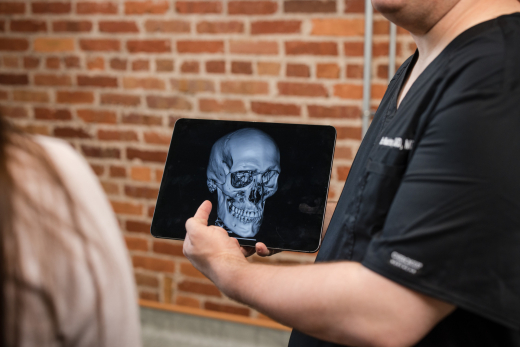
- Advanced imaging, such as 3D scans or MRIs, when necessary
This thorough approach allows our oral and maxillofacial surgeons to determine whether symptoms stem from muscle tension, joint inflammation, bite imbalance, or structural concerns. From there, a personalized conservative treatment plan can be developed to address your specific needs.
When to See a TMJ Specialist
While many patients experience improvement with conservative care, persistent or worsening symptoms should be evaluated by a specialist. Early intervention can help prevent long-term joint damage and reduce the risk of chronic pain.
You may benefit from a professional evaluation if you experience:
- Jaw pain that lasts more than a few weeks
- Frequent headaches or facial pain
- Locking, clicking, or popping accompanied by discomfort
- Difficulty opening or closing your mouth fully
- Symptoms that do not improve with self-care, physical therapy, or medication
Managing TMJ Pain Without Surgery at Rockcliff
At Rockcliff Oral and Facial Surgery, TMJ care is guided by a conservative-first philosophy rooted in surgical expertise. Our oral and maxillofacial surgeons are uniquely trained in both non-surgical management and advanced surgical treatment, allowing us to recommend the most appropriate approach based on each patient’s condition.
“The key is to treat TMJ disorder before it becomes chronic or causes structural damage. Conservative care works best when patients understand what’s happening and how to manage it long-term,”
says Dr. Warren.
By combining comprehensive evaluation, targeted therapy, and ongoing follow-up, our team helps patients achieve lasting TMJ relief while avoiding unnecessary procedures whenever possible.
Your TMJ Treatment Options
If jaw pain, muscle tension, or limited movement are interfering with your daily life, effective TMJ relief may be possible without surgery. At Rockcliff Oral and Facial Surgery, our oral and maxillofacial surgeons develop personalized, non-surgical TMJ treatment plans designed to reduce pain, restore function, and protect long-term joint health.
Schedule a consultation to receive a comprehensive evaluation and a treatment plan tailored to your specific condition.
Frequently Asked Questions About TMJ Relief & Treatment
Can TMJ go away on its own?
Mild TMJ symptoms may improve on their own, especially if caused by temporary stress or jaw overuse. However, persistent pain, locking, or limited movement typically requires evaluation to prevent chronic inflammation or joint damage.
How long does TMJ relief take?
The timeline for TMJ relief depends on the severity and cause of the condition. Some patients notice improvement within a few weeks of starting non-surgical TMJ treatment, while others may require several months of therapy and monitoring for lasting results.
Are muscle relaxants effective for TMJ?
Muscle relaxants can help reduce jaw muscle spasms associated with clenching and grinding. They are usually prescribed short-term and are most effective when combined with other conservative TMJ treatments such as physical therapy or oral appliances.
Is surgery always required for TMJ?
No. Most cases of TMJ disorder can be managed successfully with non-surgical treatment. Surgery is typically reserved for severe structural damage, trauma, or symptoms that do not improve with conservative care.
Back